

Gut & Digestive Health
Why Gut Health Matters
Your digestive system does far more than process food. Understanding how it works can help you make better choices for digestion, nutrition and everyday wellbeing.
Divine Odonkor9 min read
Read Article 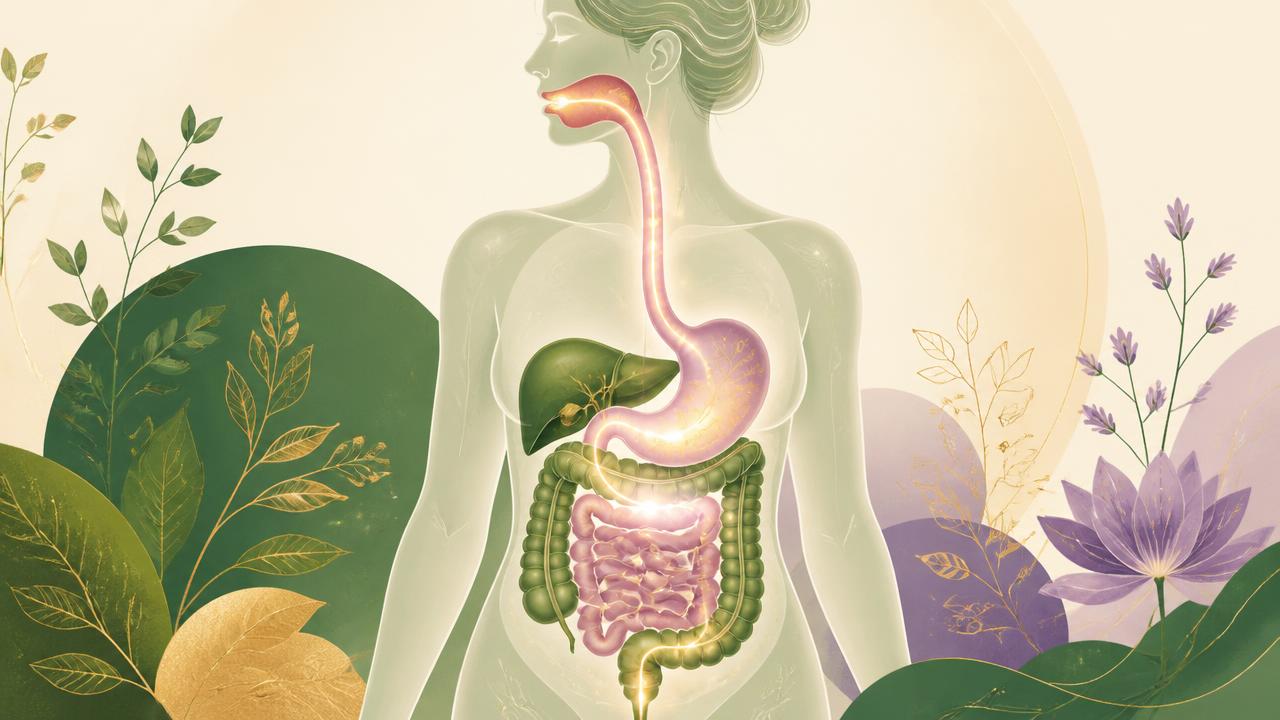
It is easy to imagine digestion as one thing that happens somewhere in the stomach. In reality it is a sequence. Food is broken down mechanically and chemically in stages, and each stage depends on the one before it.
The digestive tract is essentially a long muscular tube running from the mouth to the anus. Alongside it sit organs that never touch the food directly — the liver, gallbladder and pancreas — but supply the bile and enzymes that make digestion possible.
Understanding the order of events makes digestive symptoms easier to describe, and makes it clearer why the same complaint can come from very different places along the tract.
Follow your food
Seven stages, from the first bite to elimination
Mouth
Chewing and saliva begin digestion.
Oesophagus
Muscular contractions move swallowed food toward the stomach.
Stomach
Food mixes with acid and digestive substances.
Small intestine
Digestion continues and much nutrient absorption occurs.
Large intestine
Water and electrolytes are absorbed and stool forms.
Rectum
Stool is temporarily stored before elimination.
Elimination
Remaining waste leaves the body.
Chewing does the first and most underrated job in digestion: it breaks food into smaller pieces so that the stages further down the tract have less work to do.
Saliva moistens food so it can be swallowed comfortably and begins the chemical breakdown of starches. Eating very quickly effectively skips much of this stage, which is one reason rushed meals often feel heavier.
Once you swallow, food no longer falls under gravity alone. Coordinated waves of muscular contraction, called peristalsis, push it down the oesophagus toward the stomach.
At the lower end sits a ring of muscle that opens to let food through and then closes again. When that ring does not close properly, stomach contents can move upward into the oesophagus — what most people experience as reflux or heartburn.
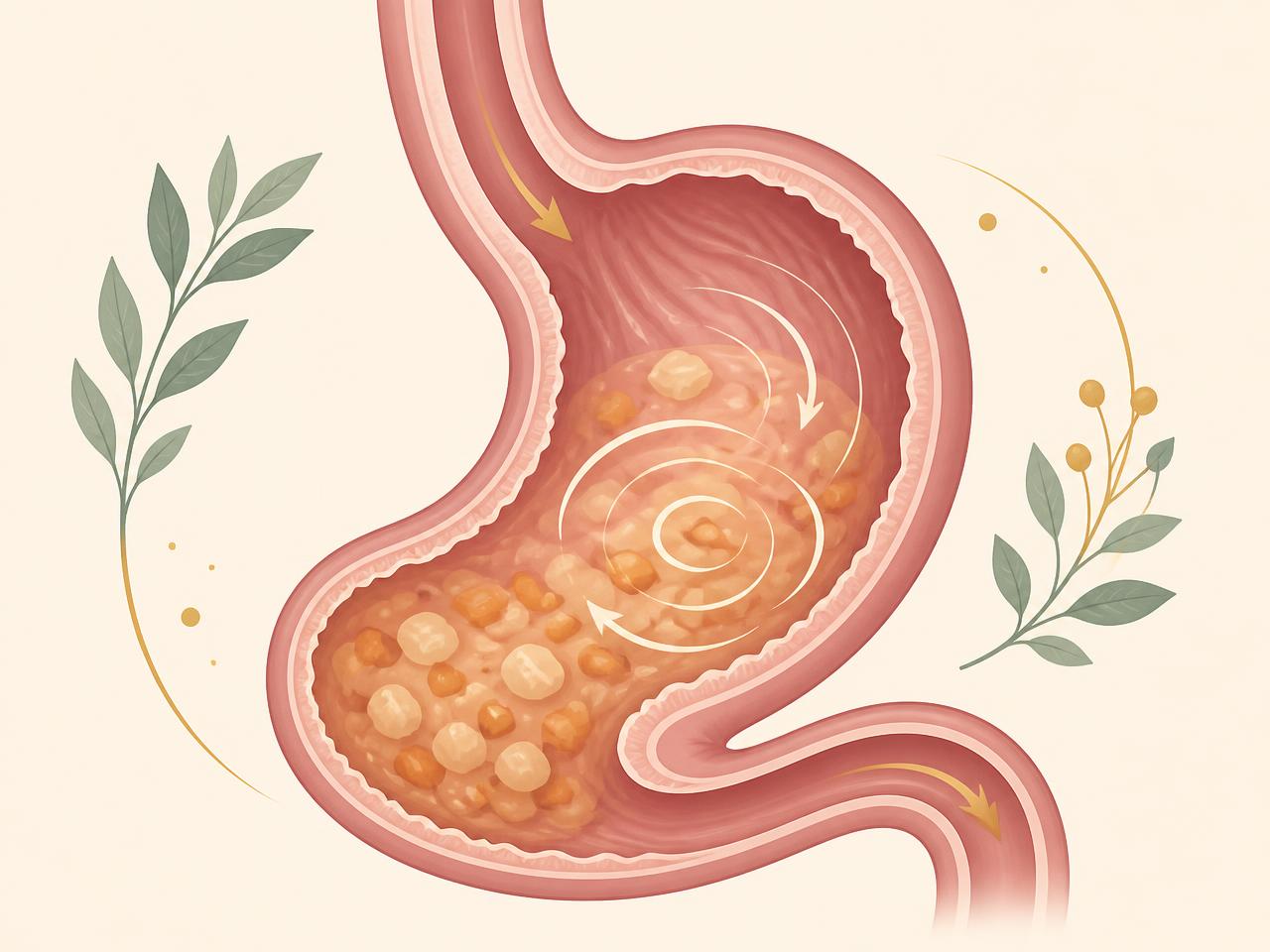
The stomach is a muscular reservoir. It holds a meal, mixes it, and releases it gradually into the small intestine rather than all at once.
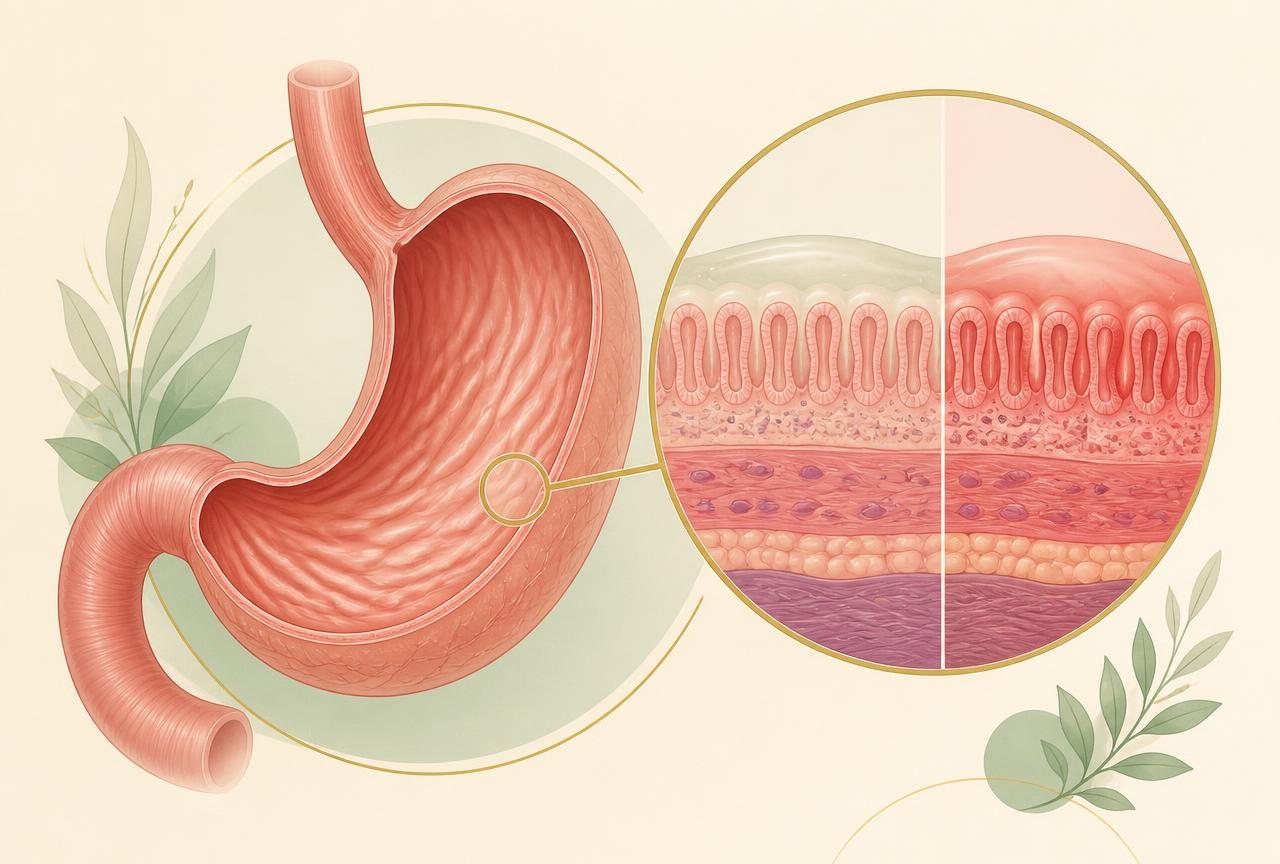
Stomach acid and digestive substances continue breaking food down, particularly proteins. Acid also helps limit the number of microorganisms that reach the intestine. Stomach acid is normal and necessary — it is not a disease in itself.
The stomach protects itself with a mucus layer and a continuously renewed lining. Symptoms tend to appear when that protection is disrupted, or when contents reflux upward, rather than simply because acid exists.
Inside the stomach
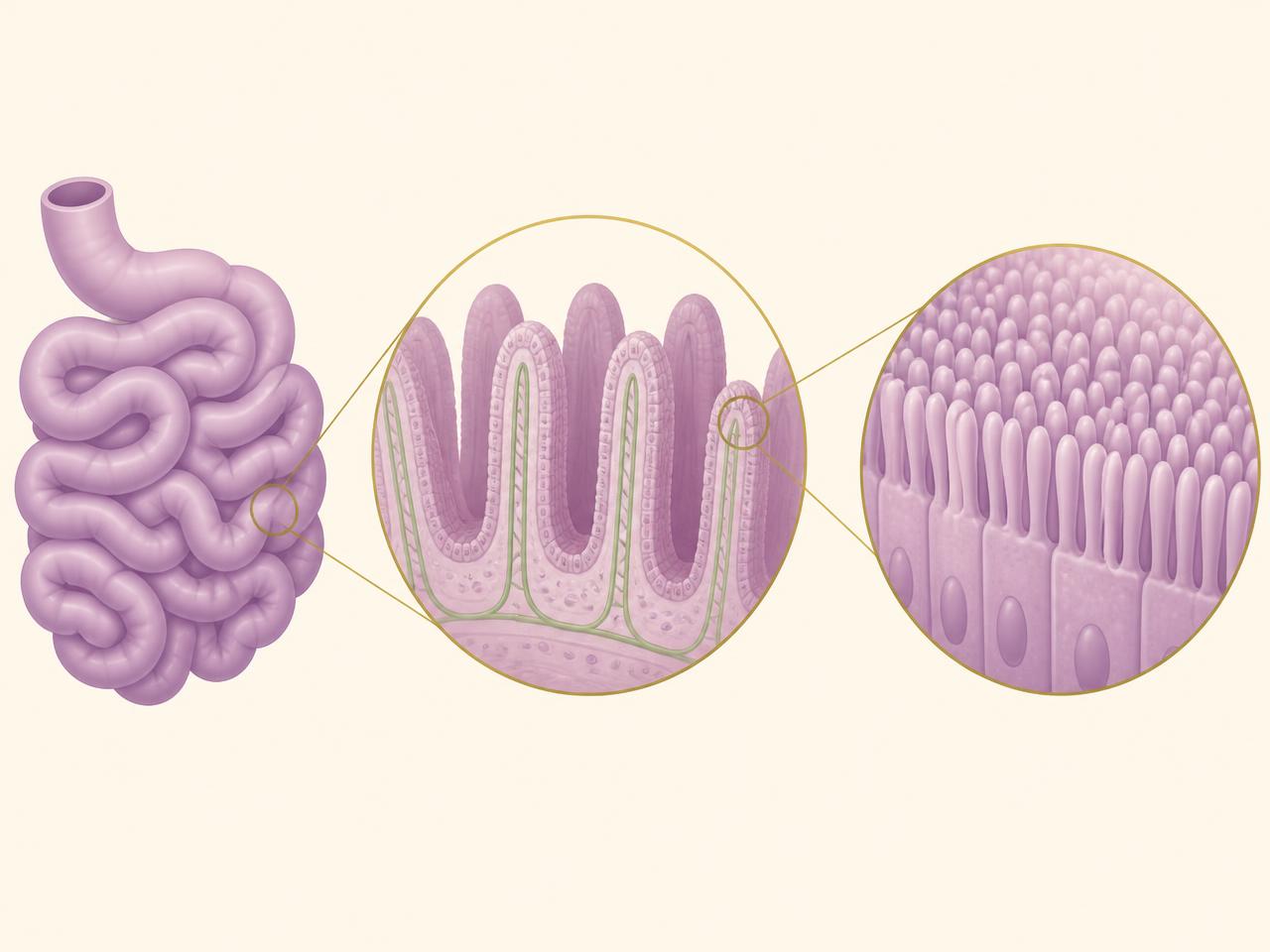
Despite the name, the small intestine is the longest part of the tract. This is where digestion is completed and where most nutrient absorption occurs.
Its inner surface is not smooth. It is folded, and covered in finger-like projections called villi, which are themselves covered in far smaller microvilli. Together these structures create an enormous surface area for absorbing nutrients into the bloodstream.
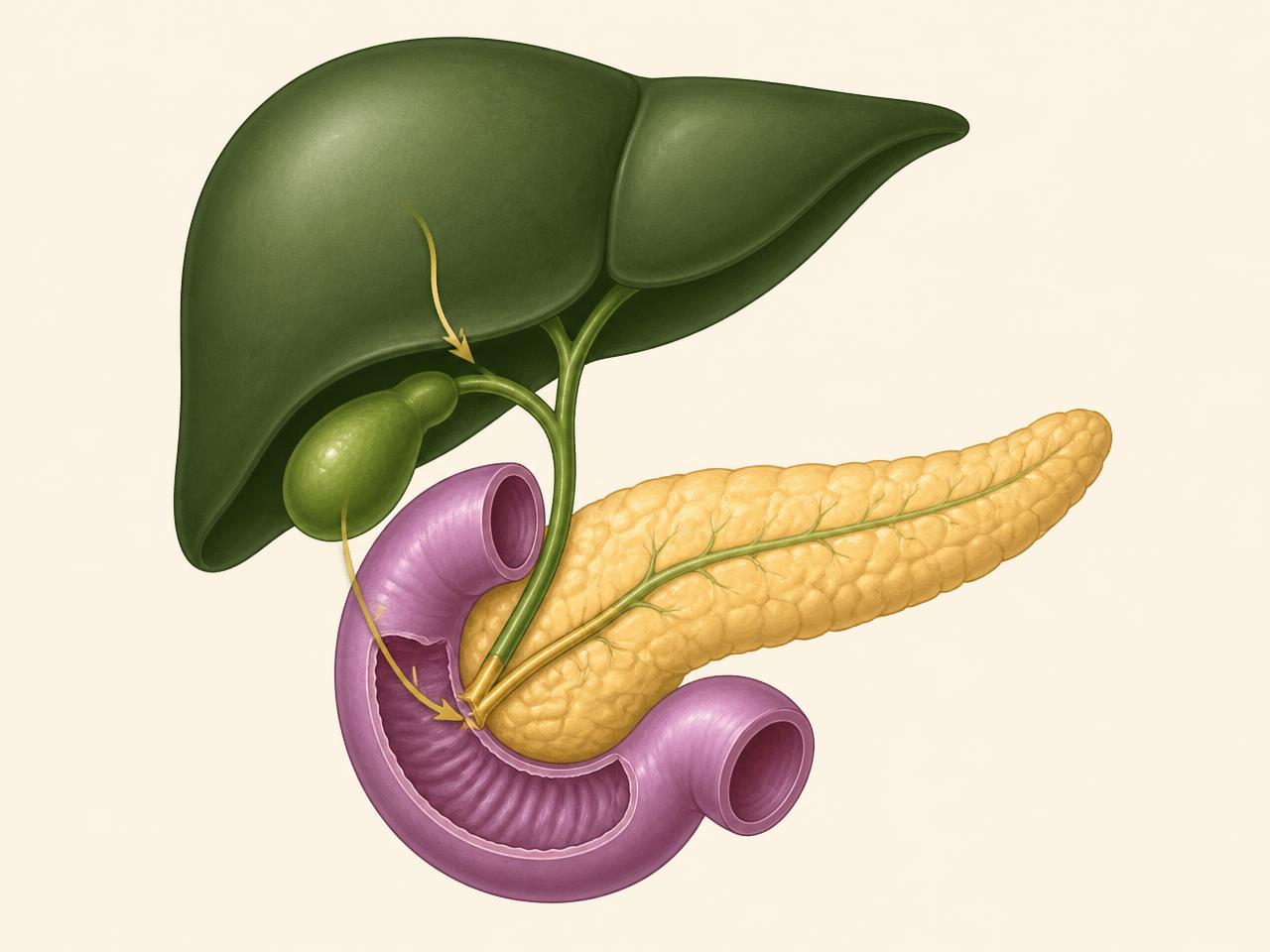
Three organs sit alongside the digestive tract and send their secretions into the first part of the small intestine, the duodenum.
A common misunderstanding is worth correcting here: the liver produces bile. The gallbladder does not make bile — it stores and concentrates it, then releases it when a meal containing fat arrives.
The pancreas contributes digestive enzymes that act on proteins, fats and carbohydrates, plus a bicarbonate-rich fluid that neutralises acid arriving from the stomach.
Who does what
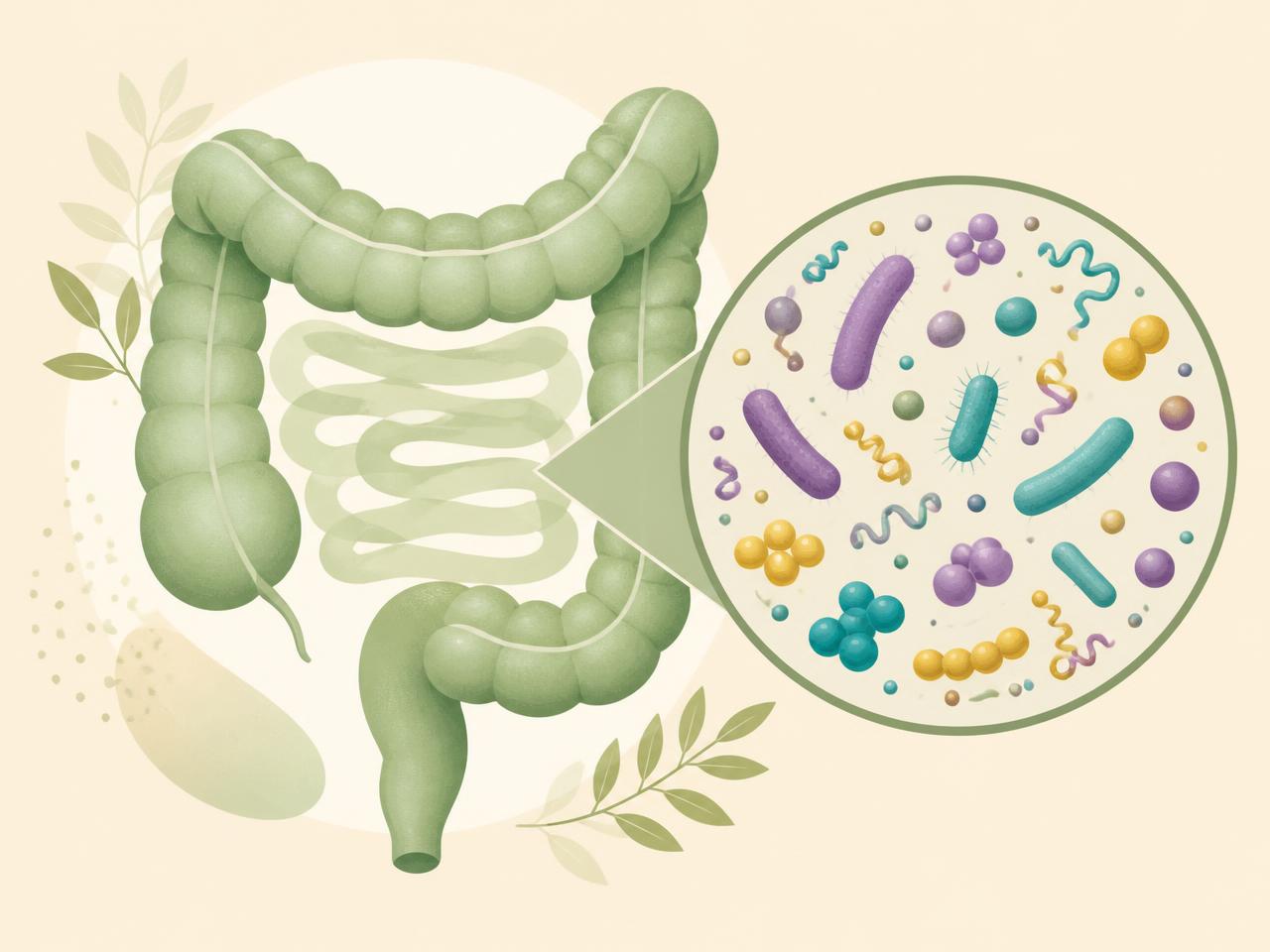
Whatever is not absorbed in the small intestine passes into the colon. Here water and electrolytes are absorbed, and the remaining material gradually takes on the form of stool.
The colon is also home to a large and diverse microbial community. These microorganisms ferment fibre and other material the body cannot digest alone, producing metabolites in the process.
This is why fibre and hydration both matter for comfort and regularity — and why a sudden large increase in fibre without extra fluid can temporarily make bloating worse.
Stool is stored in the rectum until elimination. Nerve signals from the rectal wall are what create the urge to go.
There is no single correct frequency. What matters more is what is usual for you, and whether that pattern changes and stays changed. Regularly ignoring the urge to go can, over time, contribute to constipation.
Transit times vary considerably between individuals and between meals. A meal generally leaves the stomach over a few hours, spends several hours in the small intestine, and can remain in the colon much longer.
Because the range of normal is wide, a single fast or slow day tells you little. Persistent change in your own usual pattern is the more meaningful signal.
Symptoms are easier to describe once you know the order of events. Discomfort soon after eating, discomfort hours later, a burning sensation rising upward, and a change in stool all point toward different parts of the tract.
That does not mean you can diagnose yourself — several conditions can produce similar sensations. But being able to describe where, when and for how long makes any medical consultation far more useful.
No product replaces the basics. The habits that support the digestive tract are the same ones that support the rest of the body, repeated consistently.
Everyday gut health
Six habits that do more than any short-term cleanse
Varied food
Build meals around a mix of minimally processed foods.
Fibre
Increase gradually — beans, oats, fruit and vegetables.
Water
Hydration helps fibre work, especially in the heat.
Movement
Regular activity supports normal bowel function.
Sleep
Poor sleep often shows up in digestion.
Stress management
Stress travels through gut-brain pathways.
Understanding digestion is useful, but some symptoms need professional assessment rather than self-management. Seek medical care if you notice any of the following:
These symptoms should not be managed with supplements alone. Seek appropriate professional assessment.
Continue learning
Gut & Digestive Health
Your digestive system does far more than process food. Understanding how it works can help you make better choices for digestion, nutrition and everyday wellbeing.
Gut & Digestive Health
Gastritis means inflammation of the stomach lining — not every uncomfortable feeling in your stomach. What actually causes it, how it is diagnosed, and when symptoms need medical attention.
Gut & Digestive Health
What the microbiome is, what current science does and does not show, and how to read microbiome claims carefully.
In development
HealSpace community
Join the HealSpace Wellness Community for practical health education, wellness tips and new learning resources.